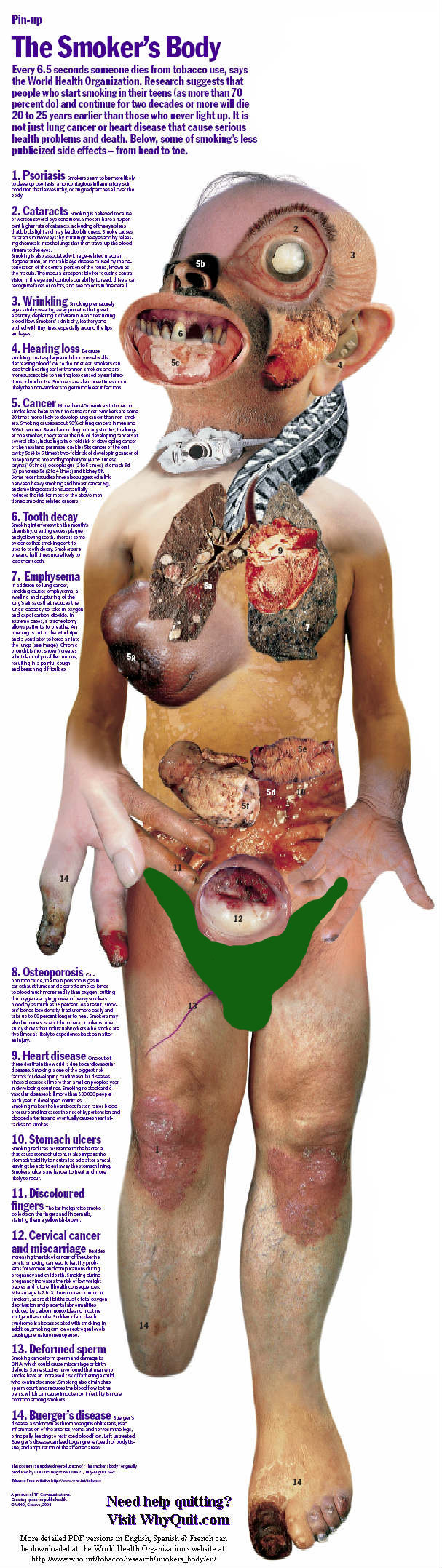
It is organically conceivable for animated cigarette smoking or detached baring to tobacco smoke to influence a lady's breast growth peril. There is run documentation that bosoms are uncovered to chemicals within tobacco smoke in engaged smokers. Think about of the liquid in the channels of the bosom of smoking ladies has demonstrated the presence of tobacco chemicals at higher fixations than were found in crimson ooze. Ladies latently uncovered to tobacco smoke have tobacco chemicals in their lifeblood too, but examinations of their bosom liquid have not been completed.
Both engaged and aloof tobacco smoke display have been connected to non-respiratory tumors. Animated cigarette smoking has been run around with tumor of the bladder, cervix, stomach, pancreas, and kidney. The impacts of latent display to tobacco smoke have been examined significantly less, but affiliations with cervical growth in grown-up ladies, as well as leukemia and mind disease in tykes, have been reported.
Saturday, September 10, 2011

Sunday, September 4, 2011
What happens to my body as I inhale cigarette smoke?
When you sniff cigarette smoke, your lungs are disciplined with tar and countless gases, incorporating carbon monoxide. Nicotine, found in tobacco, changes your centermost apprehensive framework as a stimulant. Once nicotine is taken into the figure, glucose ascents somewhat, giving you expanded life that will soon subside and leave you exhausted and maybe dampened, filling the pining for additional nicotine. As a vasoconstrictor, nicotine tightens crimson ooze vessels and confines lifeblood stream, creating changeless harm to corridors in the extended run. Resulting from the fact that both male and female climaxes rely on lifeblood course, nicotine can alter your sex existence.
It just brings seconds for nicotine to range the mind, but its belongings can final for a whole day. Unfortunately, corticosterone, the anxiety hormone, decreases nicotine's effectuality. This implies that if you’re focused on you will utilize more nicotine to feel an effect. As you are able to picture, the more you smoke, the higher your tolerance for nicotine, and the more ward you come to be on the pill. When compelled to strive for an extended period without smoking you will no doubt feel bothered and more onrushing. Moreover, in case you observe or not, your cognitive working should most obviously be disabled.
What are the short-term and long-term health risks of smoking?
Short-term:
* Stained nails and teeth
* Bad breath
* Wrinkled, aged skin
Long-term:
* Lung cancer
* Emphysema
* Heart disease
* Earlier menopause in women
* Death
It just brings seconds for nicotine to range the mind, but its belongings can final for a whole day. Unfortunately, corticosterone, the anxiety hormone, decreases nicotine's effectuality. This implies that if you’re focused on you will utilize more nicotine to feel an effect. As you are able to picture, the more you smoke, the higher your tolerance for nicotine, and the more ward you come to be on the pill. When compelled to strive for an extended period without smoking you will no doubt feel bothered and more onrushing. Moreover, in case you observe or not, your cognitive working should most obviously be disabled.
What are the short-term and long-term health risks of smoking?
Short-term:
* Stained nails and teeth
* Bad breath
* Wrinkled, aged skin
Long-term:
* Lung cancer
* Emphysema
* Heart disease
* Earlier menopause in women
* Death
Wednesday, August 31, 2011
ATHEROSCLEROSIS
Research has shown conclusively that smoking accelerates arteriosclerosis (hardening of the arteries) and atherosclerosis (a type of arteriosclerosis characterized by fatty deposits in the artery walls), increasing the risk of heart disease, stroke, and peripheral vascular disease. Consequently, smokers have a higher risk of cardiovascular disease in general, and heart attacks in particular, than nonsmokers.
Cigarettes may promote atherosclerosis by a va- riety of mechanisms. Smoking increases the levels of carbon monoxide, a poisonous gas that is inhaled in smoke. Over the long term, this increased level of carbon monoxide from the inhaled smoke itself contributes to damaging the lining of the blood vessels and accelerates the process of atherosclerosis.
Smoking also affects serum cholesterol. Smokers tend to have decreased levels of high-density lipoproteins (HDL—the “good cholesterol) and increased levels of low-density lipoproteins (LDL-the “bad’ cholesterol) and triglycerides (a blood fat), thereby raising the risk and severity of atherosclerosis.
Blood levels of fibrinogen, a component of blood necessary for clotting, are raised by smoking. This may increase the likelihood of blood clots forming and blocking the coronary arteries, leading to a heart attack or stroke. Such clots are most likely to form on areas of the endothelium (the inner lining of blood vessel walls) that are clogged by atherosclerotic plaque and have been roughened by prior damage, rather than on those that remain smooth and intact. Smoking may also cause blood platelets to clump abnormally, adding to the risk of clotting.
Stopping smoking results in an increase in the ratio of HDL to LDL cholesterol and lowers the level of fibrinogen in the blood. Both of these changes help reduce the risk of a heart attack.
Sunday, August 28, 2011
Birth Weight
A definite, well-established relationship exists between smoking and low birth weight defined as birth weight less than 2500 grams. In general, the average reduction in birth weight seen in smoking women is 200 grams. This results in a doubling of the incidence of low birth weight infants. The risk and magnitude of low birth weight is related to the number of cigarettes smoked during pregnancy. The critical period during which smoking exerts its deleterious influence has not been determined, but it has been shown that if women cease smoking during pregnancy the infant’s birth weight will be comparable to a non-smoker.
The exact mechanism for decreased birth weight is unclear. At the present, there is evidence that smokers do not consume fewer calories or have less weight gain during pregnancy so it has been concluded that the decrease in birth weight seen in infants of smokers is not due to nutritional factors. Anthropomet- ric studies comparing the differences in body composition in infants of women who smoke with those of non-smokers have found a decrease in the fat-free mass. Specifically, weight and length were decreased in the infants of smokers, but no differences in skinfold and limb circumference measurements were seen. It is unknown whether the physiological effects of smoking on fetal growth are due to the vasoconstrictive properties of nicotine on uterine blood or the decreased oxygen availablity due to carbon monoxide and the formation of carboxyhemoglobin.
Subscribe to:
Posts (Atom)